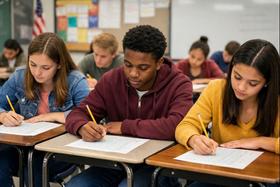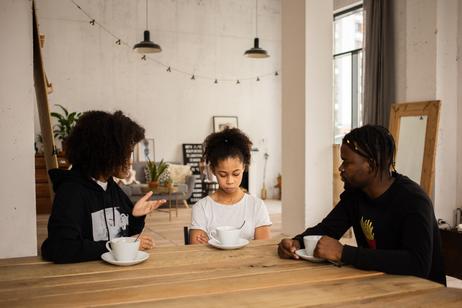
Parent and teacher discussing a student's academic progress during a school conference
As parents struggle to navigate the balance of fostering their child's autonomy versus being actively involved, knowing when to meet with a teacher depends on a child's age, behavior, academic progress, and any special learning needs. Whether a student is gifted, struggling, or displaying average abilities plays a large role in determining when parents should intervene and meet with school leaders.
In 2026, many schools also use parent portals, messaging apps, and virtual conferences to supplement traditional face-to-face meetings, making communication more accessible than ever. However, knowing when to schedule a conversation remains just as important as the method used.
This video offers an example of a parent-teacher conference.
When to Meet with a Teacher
Collaborating Insights
If you have serious and pressing concerns about your child's behavior, academic progress, or other specific or general issues, teachers can provide a great deal of insight into your child's development. According to Terri Mauro, author of The Everything Parent's Guide, "If you have a pressing concern that needs to be addressed right away, don't delay in requesting a meeting yourself."
Surprisingly, teachers may actually spend more consistent time observing your child throughout the day than most parents. Once children are home, they may be playing with friends, participating in extracurricular activities, or spending time independently. As a result, meeting with a teacher to discuss classroom observations can help identify concerns early, bring problems to the forefront, and create a collaborative plan for success.
Research from the National Center for Education Statistics continues to show that family involvement remains closely associated with positive educational outcomes, reinforcing the value of regular parent-teacher communication.
Early Communication to Foster Success
According to the Child Development Institute, "The first contact with your child's teacher, in many ways, is the most important. This is the time you are building rapport and developing a relationship of trust."
Because those early opportunities are so valuable, a brief note, phone call, email, or face-to-face meeting can establish a positive relationship before concerns arise. Furthermore, "A good time to contact your child's teacher is during the first week of school. This allows you to meet one another when neither has any complaints. Otherwise, the first teacher contact can be unpleasant."
This video offers tips for a parent-teacher conference.
During the first week of school, teachers probably know very little about your child, making it an ideal opportunity for parents to share helpful information about learning styles, interests, or concerns. It is also a chance to communicate your willingness to work as a partner throughout the school year.
As the Child Development Institute notes, "Let the teacher know from the start that you want to work with her, not against her so your child will learn. Do not feel you are intruding or asking for special treatment. You are simply indicating that you are truly concerned that your child receives a good education."
Parents interested in strengthening these partnerships may also find Public School Review's article on How Public Schools Support New Teachers helpful, as strong communication between families and educators benefits both new teachers and students.
Using Report Cards and Other Tools for Communication
If you do not have an urgent concern or emergency, report cards and progress reports are normally good indicators of whether you should schedule a meeting or take additional action to support your child.
Mauro further explains, "Try to check in with your child's teacher when you get progress reports and report cards, depending on your district's schedule, about every five weeks. That should be enough to get questions answered and stay on top of problems without you or the teacher bugging each other to death."
Many schools also schedule parent-teacher conferences each year. Parents should take full advantage of these opportunities, even if their child's grades and behavior are positive. Teachers often appreciate hearing from engaged families before concerns develop.
In addition to report cards, many districts now provide online parent portals that allow families to monitor grades, attendance, assignments, and teacher feedback throughout the school year.
Public School Review's guide to How to Compare Public School Value Beyond Test Scores also explains why regular communication provides a fuller picture of student success than grades alone.
Teacher-Requested Conferences
While many parents are proactive in scheduling conferences, it is equally important to respond promptly if a teacher requests a meeting.
According to the Child Development Institute, teachers usually request conferences to discuss unacceptable behavior, lack of academic progress, or concerns that a learning challenge may exist. These conversations can naturally make parents feel defensive, but maintaining an open mind allows everyone to focus on helping the child succeed.
Teachers generally request meetings because they want to work with parents to develop practical solutions, not to assign blame.
Parents may also benefit from reading Public School Review's article, How to Spot a School Climate Problem Before Enrolling, which discusses the importance of strong communication and collaboration between schools and families.
How to Meet with Your Child's Teacher
Tips for Successful Communication
As Terri Mauro explains, conferences with teachers can be valuable opportunities to learn how your child is doing academically, socially, and personally. However, "too often, parents emerge from the meeting realizing that they forgot to ask a particular question, forgot to say something important, or forgot to listen."
To avoid these common pitfalls, parents should arrive on time and come prepared with an open mind. As Mauro notes, "If the teacher has called you in for a reason, you've likely heard one side of the story, your child's. Be willing to hear the other side. You'll learn a lot more if the teacher isn't busy being defensive."
Paired with the importance of open-mindedness, parents should also strive to listen as much as they speak. It is tempting to tell teachers what you think your child needs, but parents should remember that teachers bring valuable professional experience and daily classroom observations that can provide important perspective.
The Institute of Education Sciences highlights the importance of collaborative parent-teacher partnerships in supporting student achievement through shared goals and ongoing communication.
This video offers 23 questions to ask at your parent-teacher conference.
As teachers share their observations, parents should come prepared with an agenda listing the topics they want to discuss. This helps keep the meeting focused and ensures that important questions and concerns are addressed before the conference concludes.
Some helpful questions include:
- Is my child meeting grade-level expectations?
- What are my child's greatest strengths?
- Where does my child need additional support?
- How can we reinforce learning at home?
- Are there any social or behavioral concerns I should be aware of?
Parents should also take notes and work with the teacher to develop a clear plan of action. After discussing next steps, establish a follow-up plan, whether through email, a phone call, another conference, or the school's parent communication platform. Regular communication helps everyone stay informed and focused on supporting the student's success.
Families may also find Public School Review's article, Public School Rankings: Are They Accurate in 2026? helpful for understanding that student success depends on much more than school rankings alone.
Building a Long-Term Partnership
Successful parent-teacher communication should not be limited to scheduled conferences. Brief check-ins throughout the school year help build trust, address small concerns before they become larger issues, and reinforce the shared goal of helping every child succeed.
Whether communication takes place in person, by phone, through email, or via a school's online communication platform, maintaining a respectful and collaborative relationship with your child's teacher creates a stronger support system for your child throughout the school year.