Updated
|
Can Homeschoolers Be Team Players for Public Schools?
As homeschooling continues to grow in 2026, the debate over allowing homeschooled students to join public school sports teams raises important questions about fairness, access, eligibility requirements, and educational choice for families.

The homeschooling ranks have continued to grow in the United States. According to the National Center for Education Statistics, about 5.2% of children ages 5 to 17 received academic instruction at home during the 2022-23 school year, compared with lower pre-pandemic levels. More recent tracking from Johns Hopkins University's Homeschool Hub found that homeschooling continued to grow in 2024-25, increasing at an average rate of 4.9% across reporting states.

Students who are homeschooled are usually taught many of the same subjects as their peers who attend public schools. Homeschooled students struggle with algebra, write book reports, study science, and learn foreign languages, just like their public-schooled friends.

However, one aspect of the public school experience that homeschooled students may not always be able to enjoy is participating in team sports. In recent years, parents of homeschooled children in several states have continued pushing to change school district and athletic association rules, advocating for their children to be part of local public school sports teams. The movement has sparked debate on both sides of the issue, proving that not all parents or school districts are “team” players.

This video explains how to put your homeschooler in the public school's sports program.

Why Some School Boards Are Reluctant to Allow Homeschoolers on Their Teams

Homeschooled Students May Not Meet the Same Academic Eligibility Requirements

One of the primary objections raised by public school officials

. . .read more

Why Public Schools Across the Country are Closing Their Campuses

Updated
|
Why Public Schools Across the Country are Closing Their Campuses
In many states, public schools are closing their doors and shuttering their campuses. Learn about why so many schools are shutting down and why it may benefit students in the long-term.

Students in schools across the country may find their campuses and classrooms shuttered beginning next fall. In a scramble to improve student performance and address funding shortages, districts are proposing school closures on large scales. Although parents and teachers are voicing their concerns about such sweeping moves, school and government officials maintain that closing under-performing schools is the right thing to do.

School Closures Across the Nation

New York City Public Schools have been at the forefront of the trend of shutting down under-performing public schools. Most recently, New York City’s Panel for Educational Policy voted to shut down 19 of the city’s public schools. The 19 schools had all been nominated for closure by Mayor Bloomberg on the basis of poor academic performance. The New York Times reports that New York City has closed or is in the process of closing 91 schools since 2002.

Meanwhile, in Chicago, the Board of Education announced in January that it would “close, consolidate, or overhaul” 14 public schools this year, according to the Chicago Tribune.

School districts in Cleveland, Ohio and Providence, Rhode Island have also recently proposed closing schools in an attempt to boost student performance and address budget shortfalls.

Reasons for School Closure

Poor performance is the most common reason given for choosing to close a school. New York City School officials say that high schools are chosen for closure on the basis of low graduation rates, low student

. . .read more

More than Academics: How Well Public Schools Provide Emotional Support

Updated
|
More than Academics: How Well Public Schools Provide Emotional Support
This article examines how public schools are addressing students' emotional and mental health needs. It highlights the importance of emotional support for academic success and discusses parental perceptions of schools' effectiveness in providing these crucial services.

More than Academics: How Well Public Schools Provide Emotional Support

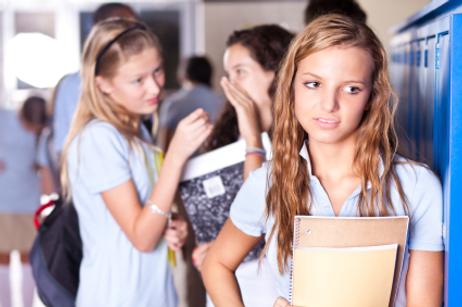
Children and adolescents arrive at today’s public schools with a wide range of special needs. Some students struggle with depression and anxiety, while others face the difficult task of living with parents who are not financially or emotionally stable. Schoolyard bullies may plague children or may be upset by their parent’s divorce or remarriage.

A recently released national poll aims to examine how well public schools provide support to students with emotional, behavioral, or family problems. Recognizing that in an era of large-scale budget cuts, programs that provide emotional support to students are in danger of being cut, the University of Michigan’s C.S. Mott Children’s Hospital National Poll on Children’s Health set out to examine how many of our nation’s public schools currently make the grade when it comes to emotionally supporting their students.

In this video, Aukeem Ballard, a teacher at Summit Preparatory Charter High School in Redwood City, CA, discusses the power of mentors in his life and career, comparing having a mentor to standing on the shoulders of giants.

The Study’s Findings

The study asked parents of students from both primary and secondary public schools to give their students’ schools a grade of A through F on three different criteria:

  • Providing a Good Education – 83% of parents of primary school students and 75% of parents of
. . .read more

Going Green: Should Public Schools Teach Green Lessons?

Updated
|
Going Green: Should Public Schools Teach Green Lessons?
The eco-friendly movement has reached our public schools and charter schools. Learn about how schools are incorporating green education into their curriculum and entire charters.

In the past decade, public awareness of our planet’s natural resources has grown, and with that understanding has come to a movement in living in environmentally sustainable “green” ways. While just a few decades ago recycling was a fringe activity, today it is a widespread practice. Hybrid vehicles have gone from fantasy to reality.

As national interest in living sustainable and eco-friendly lifestyles continues to grow, a number of public schools are joining the green movement, designing green curricula for students at all levels. In fact, some charter schools are now based around the ideals of green living.

This TED Talk discusses teaching sustainability in schools.

Green Charter Schools

The New York Times reports that across the country, public charter schools that are based around a “green” theme have been springing up. The Green Charter Schools Network, which is based in Madison, Wisconsin, says it has counted about 200 green charter schools nationwide, according to the Times. These green charter schools serve several purposes that both benefit the earth and their students’ futures.

Preparing Students for Work in the Sustainable Energy Industry

Some charter schools focus on technical skills that will prepare students to find work in the “green collar” jobs that are frequently touted as a part of a growth industry.

The Times article mentions Manhattan’s Urban Assembly School for Green Careers, which opened in Fall

. . .read more

Public School Gardens: Good for Learning or a Waste of Time?

Updated
|
Public School Gardens: Good for Learning or a Waste of Time?
Explore the debate over public school gardens, including educational benefits, academic concerns, and how schools use gardens in 2026.

Public school gardens have been sprouting across the country, especially in California, which is the home state of culinary pioneer and “slow food” spokeswoman Alice Waters. As a champion of local agriculture, Waters inspired one of the first school gardens in Berkeley, California, and many public school campuses have followed in these green footsteps.

However, a fierce debate over the merits of public school gardens erupted following an article in The Atlantic by Caitlin Flanagan that criticized the practice of devoting class time in public schools to the cultivation of school gardens. Flanagan argued that by allowing students to spend school hours working in a garden, schools may do students a disservice academically. She reminded readers that California's public school system has long struggled with achievement gaps and graduation challenges. When a state's public school system is failing to meet the academic needs of its students, should it spend time and resources on a school garden program?

Flanagan's anti-garden argument was not taken lightly by those who count themselves as advocates of school gardens. Her article sparked responses from both sides of the debate, forcing parents and teachers to clarify their positions on this now controversial topic.

Families interested in how schools are expanding hands-on learning may also want to read Public School Review’s article on What Is Project-Based Learning?.

Garden Advocates

Tending a garden helps students learn to make better food choices

Cultivating a garden teaches students about fruits

. . .read more

Recent Articles

What Rising E-Bike and Traffic Concerns Mean for School Commutes
Discover how rising e-bike use and increasing traffic are changing school commutes, and what parents should evaluate before choosing a public school.
School Safety Beyond Lockdowns: What Parents Should Review
Learn how to evaluate a public school's safety beyond lockdown drills, including school climate, emergency planning, mental health support, and communication.
How to Judge Special Education Capacity Before You Enroll
Learn how to evaluate a public school's special education capacity before enrolling your child, from staffing and IEP implementation to inclusion and support services.