Evaluating Public Schools

This section provides tools to aid in finding the best public school option for your child. Compare private and public schools, explore school zoning issues, and delve into the public school grading and ranking system. Find information on the safest schools and what they are doing right.

View the most popular articles in Evaluating Public Schools:

How Many Politicians Send their Kids to Public Schools?

Updated
|
How Many Politicians Send their Kids to Public Schools?
This article examines the trend of politicians sending their children to private schools while advocating for public education. It highlights the disparity between policymakers' personal choices and their public stances, raising questions about their commitment to improving public schools.

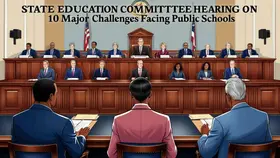
Public education becomes a popular platform for politicians during election season. However, just how many of those federal legislators enjoy the fruits of their labor? According to some of the most recent figures, many public servants opt for private schools to educate their children and grandchildren. We'll take a look at some of the specific numbers to determine just how big a stake our country's politicians have in the state of our public education system today.

The Heritage Foundation

The Heritage Foundation is a research and educational think tank founded in 1973. According to the organization's website, a survey conducted on members of Congress in 2003 showed that nearly half of the members sent at least one child to private school. Specific figures showed that 41% of representatives in the House and 46% of U.S. senators send or have sent at least one of their children to a private institution. That contrasts with the rest of the country, where only 10% of families send kids to private schools. This 2003 survey showed similar results to surveys conducted in 2001 and 2002, indicating the ongoing trend.

This debate from 2007 illustrates the issue of politicians supporting public schools yet sending their children to private schools.

Other data gathered by the Heritage Foundation showed the following Washington elite also exercised their private school option:

  • 31% of House Education and Workforce Committee members
  • 45% of House Ways
. . .read more

Sex Offenders: Working in Your Local Schools

Updated
|
Sex Offenders: Working in Your Local Schools
Learn how public schools are strengthening hiring practices, background checks, and reporting requirements in 2026 to better protect students from educator sexual misconduct.

A troubling report by the Government Accountability Office (GAO) found that individuals with a history of sexual misconduct were working in some neighborhood schools. Even more concerning, some were able to obtain new teaching or staff positions after behaving inappropriately toward children in other school districts. The report identified numerous breakdowns in hiring practices that allowed these individuals back into schools because of incomplete background checks, poor record sharing, and administrative loopholes.

More than a decade later, the issue remains an important school safety concern. While states have strengthened hiring laws and school districts have improved screening procedures, experts agree that vigilance remains essential. Schools today are expected to conduct far more comprehensive background investigations than they did when the original GAO report was released, but inconsistencies between states and districts still exist.

Parents who want to better understand educator screening practices can also read Public School Review's guide to Should Schools Conduct Background Checks on Teachers?.

The GAO Report

The original report released by the U.S. Government Accountability Office examined 15 case studies involving public schools that employed individuals with troubling histories. According to the investigation, 11 of the employees had previously engaged in inappropriate sexual conduct involving children. In six of those cases, the individuals went on to abuse children again after obtaining employment in another school district.

The report was prepared in response to growing concerns about weaknesses in school hiring practices and followed earlier federal research highlighting educator sexual misconduct as

. . .read more

Public School Police Departments: Combating Traffic, Crime and Budget Cuts

Updated
|
Public School Police Departments: Combating Traffic, Crime and Budget Cuts
Police departments on public school campuses have played a major role in reducing violent crime and the speed limit. Unfortunately, they are also fighting an uphill battle against budget cuts.

This article has been updated to reflect 2026 data and recent developments.

One of the challenges facing many public schools today is how to keep crime out of schools so that learning can take place more effectively. To address this need, many school districts across the country have created their own police departments, with law enforcement officials who do everything from teaching anti-drug classes to making arrests when necessary. These officers work with students and faculty every day, developing a rapport with students and heading many potential problems off at the pass.

The role of school-based law enforcement remains significant in 2026. The most recent national data from the National Center for Education Statistics show that 48% of public schools had a school resource officer present at least once a week during the 2023-24 school year.

This video explains why police add to school safety.

However, severe budget cuts at many schools have forced some districts to take a closer look at these police departments, even cutting staff in some areas. These decisions have not gone over well with school administrators, who believe officers are essential for maintaining a safe environment where students can come to learn every day.

On the other hand, districts with budgets intact have found ways to use law enforcement officials even more effectively, adding to their list of responsibilities to expand

. . .read more

What a National Blue Ribbon of Distinction Truly Means

Updated
|
What a National Blue Ribbon of Distinction Truly Means
This article explains the National Blue Ribbon of Distinction, an award given by the U.S. Department of Education to schools demonstrating high academic standards and significant improvements in student achievement. It details the criteria for selection, benefits of the program, and its impact on educational excellence.

Each year, the U.S. Department of Education recognizes hundreds of public and private schools across the country for their commitment to educational excellence and their ability to overcome outstanding odds to properly educate their students. These schools receive the National Blue Ribbon of Distinction, an award reserved for schools that boast students who meet and maintain high educational goals. The Blue Ribbon Award celebrates the idea that all students, regardless of background, ability, or location, deserve an excellent education. The current winners are listed on the U.S. Department of Education website.

What is a National Blue Ribbon of Distinction?

The National Blue Ribbon Schools Program honors public and private K-12 schools that are either academically superior in their state or that demonstrate dramatic gains in student achievement. Source: National Blue Ribbon website,

Schools at all levels – elementary, middle, and high schools – are eligible for the award. Each school that is given the honor of a Blue Ribbon Award shares several key characteristics: they have administrators and teachers who are dedicated to high standards of learning for all students, they engage in data collection and analysis to determine the efficacy of instruction and assessment, they have students who demonstrate academic excellence, and they undertake professional development to stay at the forefront of best practices.

The award has been given out since 1982, evaluating student achievement with measurable characteristics that help identify not only the high achievers but also those schools that

. . .read more

Gangs, Drugs, and Firearms: The State of Public Schools Today

Updated
|
Gangs, Drugs, and Firearms: The State of Public Schools Today
Gangs, drugs, and guns may be more prevalent on public school campuses than parents think. Learn about the high percentage of public school students who are exposed to these dangers each day – and what parents can do to protect their kids.

When parents send their children to school in the morning, most assume their kids will not be exposed to drugs, alcohol or gang activity on campus. They believe schools are a relatively safe environment, dedicated to the task of teaching children the basic academic disciplines and preparing them for productive, prosperous adulthood. Unfortunately, new findings suggest that alcohol and drug use, as well as gang activity, may be more prevalent in public schools than parents realize.

Concerning Numbers from Recent Survey

A recent report by the National Center on Addiction and Substance Abuse at Columbia University (CASA) showed potentially disturbing findings. According to the study, as many as one in four middle and high school students have reported the presence of both drugs and gangs on their campuses. An analysis in the Los Angeles Times deduced that approximately 5.7 million students across the country are also more likely to drink, smoke and use drugs than students at private and parochial schools, where drugs and gangs are virtually non-existent.

Former U.S. Secretary of Health, Education and Welfare, Joseph Califano Jr., is responsible for the study. Califano told WebMD that the prevalence of drugs and gang activity is a cancer in public schools. Califano adds, "It is just outrageous. It is nothing less than state-sanctioned child abuse to require parents to send their kids to schools where drugs and gangs are present."

Califano told the Los Angeles Times that the

. . .read more

Recent Articles

Is Your Child's School Day Too Structured?
Discover where free time disappears during your child's school day, how to evaluate lunch, recess, and classroom schedules, and what parents can do when breaks become structured activities.
When Your Child's Best Friend Is in Another Class
Discover how to help your child when their best friend is assigned to another classroom, including school placement policies, maintaining friendships, building connections, and knowing when to request help.
Should Your Child Repeat a Grade or Move Ahead?
Before agreeing to grade retention, learn what evidence to request, how to review school policies, explore alternatives, understand parental rights, and secure an effective academic support plan for your child.

Evaluating Public Schools

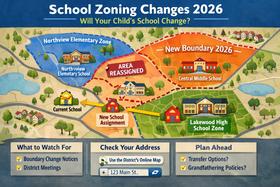
SCHOOL ZONING
Learn more about zoning rules, how they impact schools and your child. This section offers information on the history of school zones, what they are, and how they work. Get information on who decides school boundaries and the impact those decisions have on the community.
GETTING STARTED
An overview of school designations, best practices for evaluating your options, and tips on choosing the best school for your child. Learn about Blue Ribbon, Vocational and Special Education schools. Get tips on finding the right school in a new neighborhood, city or state.
GRADING AND RANKING SCHOOLS
Explore the public school grading/ranking system, how it works and what it means. Get latest national rankings and read what critics of school grading have to say. Take a look at the nation’s top performing schools as ranked by U.S. News and Newsweek.
PUBLIC SCHOOL SAFETY
A comprehensive look at the safety of US public schools. Learn what schools are doing to combat gangs and drugs, prepare for natural disasters, and protect your children from predators. From web cameras to armed guards, see what tools public schools are employing to keep kids safe.
PUBLIC VS. PRIVATE SCHOOLS
A comparison of public and private schools, the pros and cons of each, and a look at the cost of getting a stellar education at both. Take a look at some of the most expensive schools, notable public school alumni, and learn more about “private” public schools.