School Controversies

The most controversial issues impacting public school students today. From bullying to book bans, this is a comprehensive look at some of the most oft-debated issues. This section features articles on school segregation, religion, over-crowding, civil rights, and green technology.

View the most popular articles in School Controversies:

New Federal Guidelines Open School Doors to Immigrant Children

Updated
|
New Federal Guidelines Open School Doors to Immigrant Children
The Obama Administration recently warned states that refusing enrollment to students based on citizenship or immigration status violates federal law.

Immigration reform has been a hotly contested issue for decades. With Congress deadlocked on the issue, state legislatures across the country have passed strict anti-immigration bills, leaving millions of immigrants in fear of deportation. One source of fear for undocumented families is that local school districts that require birth certificates, social security numbers, and other vital information in order to enroll students will reveal the family’s undocumented status and lead authorities to apprehend them. The fear of legal retribution is so great that for many families, removing their children from school is their only choice.

Plyler v. Doe

The recent wave of state-based restrictions on enrollment of undocumented students is somewhat curious given that the Supreme Court ruled that these students have an equal right to education. In their 1982 ruling in Plyler v. Doe, the justices held that schools cannot:

  • Deny a student enrollment based on undocumented status;
  • Require different procedures to determine a student’s residency;
  • Engage in any activities that may discourage a student from enrolling;
  • Require students or their parents to document their immigration status;
  • Ask questions that may expose a student’s immigration status;
  • Require a student’s social security number for enrollment purposes.

Furthermore, as a result of the ruling, school officials involved in enrollment and intake of new students are not obligated to enforce U.S. immigration laws. Yet, despite these clear-cut guidelines regarding student enrollment, public schools keep finding ways to exclude immigrant and undocumented children.

This video explains the DACA parameters.
. . .read more

Nation’s Public School Personnel Embroiled in Cheating Scandals

Updated
|
Nation’s Public School Personnel Embroiled in Cheating Scandals
In today’s climate of high-stakes testing, some teachers and administrators are cheating the system by providing test answers to students, changing student answers, and reviewing test questions before state tests are administered in order to feign the appearance of student success.

As the pressure to demonstrate student achievement has increased over the last decade, some educators have begun bending the rules. While cheating scandals involving teachers are nothing new, with the passage of the No Child Left Behind Act (NCLB) in 2002, the stakes for teachers and students alike rose dramatically.

NCLB’s strict testing and performance requirements have gotten the most attention over the years. Students in elementary and middle grades are required to be tested annually in math and reading. High school students must be tested at least once between tenth and twelfth grade. Schools must also demonstrate “adequate yearly progress,” in which students show year-to-year improvement towards the eventual goal that 100 percent of students are proficient on tests in both subject areas.

Originally, districts had until 2014 to meet 100 percent proficiency. But by 2011 it became clear that thousands of schools across the country would not meet this goal. As a result, the Obama Administration agreed to award waivers to districts that could not reach the goal; however, districts had to agree to implement teacher evaluation systems that were directly tied to student test scores if waivers were to be granted. Thus, cheating scandals involving educators have since become much more commonplace.

Cheating Cases Reported Across the Nation

Educators in Philadelphia have been charged with “fostering a culture of cheating” after the state’s attorney general discovered in 2008 that teachers had provided test answers to students, improperly reviewed state

. . .read more

State-Mandated Recess May be Coming to New Jersey Schools

Updated
|
State-Mandated Recess May be Coming to New Jersey Schools
Discover why daily recess remains essential in 2026, how New Jersey's recess law has influenced schools, and what current research says about its academic and health benefits.

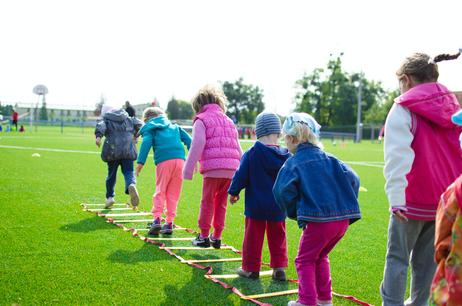
Recess has been a core component of the public education experience for generations. However, pressure from standardized testing, academic recovery efforts, and packed instructional schedules has often made outdoor playtime a casualty in the quest to improve academic performance. Some school districts have limited the amount of outdoor time students receive during the school day, while others have reduced recess in favor of additional classroom instruction. At the same time, many educators and health experts continue to advocate for protecting recess because of its proven benefits for students' physical, mental, and academic well-being.

New Jersey became one of the first states to guarantee daily recess for elementary students, and its legislation has since become a model for other states considering similar policies.

About S-1501

The bill introduced in the New Jersey Legislature as S-1501 eventually became law. Today, New Jersey requires all public elementary schools serving students in kindergarten through fifth grade to provide at least 20 minutes of recess each school day, excluding instructional time needed for physical education. Schools may only withhold recess under limited circumstances involving student safety or other exceptional situations.

State Senator Shirley Turner, who championed the legislation for many years, argued that students perform better academically when they receive regular opportunities to play and recharge during the school day. Since the law took effect, education leaders across the country have increasingly recognized recess as an important part of a well-rounded education rather than simply a break from learning.

Parents interested in learning

. . .read more

Segregated Proms: An Ongoing Controversy in Georgia

Updated
|
Segregated Proms: An Ongoing Controversy in Georgia
We examine recent efforts by students to overturn the longstanding tradition of segregated proms in many areas of the state, and why the effort still faces challenges today.

This article has been reviewed and updated for accuracy and relevance as of 2026.

Prom is a rite of passage for many high school students; a chance to celebrate with friends before everyone heads in different directions after graduation. For students at some Georgia high schools, the evening celebrations were restricted according to the color of a student’s skin. Segregated proms have been going on in some areas of Georgia for decades since the schools backed out of sponsoring the events. In the hands of parents and students, proms have become an “invitation-only” event, with black students hosting one party and white students hosting another.

Change is in the Air

This year, four students at Wilcox County High School decided it was time for a change. The female students, two white and two black, have decided it is time for their school to have an integrated prom. The students created an Integrated Prom Facebook page, where they wrote, “We live in rural south Georgia, where not too many things change. Well, as a group of adamant high school seniors, we want to make a difference in our community. For the first time in the history of our county, we plan to have an integrated prom.”

The four friends began their campaign when they decided they all wanted to be able to enjoy their senior prom together. One of the girls, Quanesha Wallace, had been elected homecoming queen for her school in the fall. However, she was

. . .read more

Do More Police in Schools Result in More Students in Court?

Updated
|
Do More Police in Schools Result in More Students in Court?
We look at recent reports that the additional police presence in schools across the country has also resulted in a higher number of students introduced to the court system.

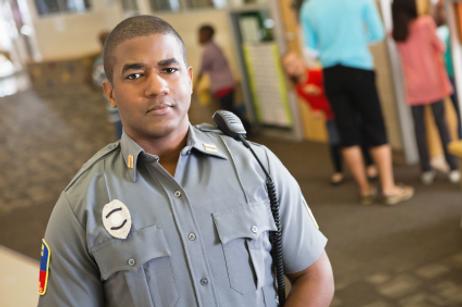
The Newtown tragedy last December brought to light the vulnerability of public schools across the country. To answer concerns about student and staff safety, many have clamored for the addition of armed guards in every school nationwide. However, research suggests that placing armed police officers in schools may create more issues even as it is addressing the need for student safety. Police presence in schools may actually increase the number of students in the criminal justice system – often for minor crimes that could have been handled at the school level.

Not a New Idea

Despite the increased rhetoric surrounding police presence in school in recent months, the idea is not new. According to the New York Times, school districts have been using federal funding and other resources to bring police officers into schools since the 1990s. Known as “school resource officers,” these armed officers typically patrol high schools and middle schools, but some have been placed in elementary schools as well. Deseret News reports that the U.S. Department of Education recently found around 28 percent of all public schools report they have an armed security guard on school grounds during class hours at least once a week.

Hundreds of larger school districts, including Los Angeles, Philadelphia, and Houston, have actually established their own police departments. These departments, boasting thousands of sworn officers and other staff members, are under the direct oversight of district officials. The Los Angeles School Police

. . .read more

Recent Articles

How Often Does Your Child's School Change Teachers Between Grade Levels?
Learn how teacher movement between grade levels affects continuity, experience, instruction, and school stability, plus the questions parents should ask about staffing patterns before choosing a public school today.
The School Pickup Test: What Arrival and Dismissal Reveal About a Public School
Discover what school arrival and dismissal reveal about safety, supervision, organization, communication, student behavior, transportation, and school climate before choosing the right public school for your child and family.
Should Siblings Attend the Same Public School?
Should siblings attend the same public school? Learn when academic needs, learning styles, programs, social fit, support services, and individual interests may make different schools better choices for children.