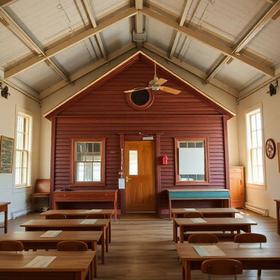
Most parents send their children to school each day under the assumption that the campus is a safe environment for all of their students. If a risk is detected, parents generally believe that school officials will do whatever necessary to eliminate the risk before allowing children to return to the scene.
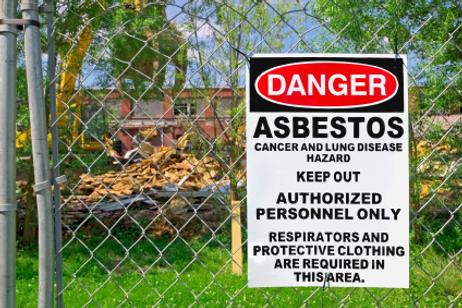
However, some public schools across the country have found dangers lurking within school walls, but have not quickly or efficiently addressed these toxins. This concern particularly applies to dangers lurking within walls quite literally, as well as floor and ceiling tiles. The danger in question here is asbestos exposure.
In this video, The Mesothelioma Center explains how many of America’s students, teachers and school staff are at danger of asbestos exposure because the deadly carcinogen lurks behind walls, above ceilings and under floors in older schools across the United States.
What is Asbestos?
According to the U.S. Environmental Protection Agency, or EPA, asbestos is a naturally occurring mineral fiber that was once commonly used in the construction of buildings. Asbestos was previously a desirable material because of its ability to insulate buildings efficiently and its relative resistance to fire.
Asbestos was widely used throughout much of the last century until health officials found a link between asbestos and some types of diseases in the 1970s. At that time, much asbestos was removed from buildings, although walls, ceilings, and floors were often