Parenting and Learning Issues

Each child learns differently. Here we offer resources on learning styles and the classroom models that support them, expert advice on how to improve learning, and tips on parental involvement.

View the most popular articles in Parenting and Learning Issues:

Advocating for Your Child in Public School (Without Overstepping)

Updated
|
Advocating for Your Child in Public School (Without Overstepping)
Learn respectful, effective strategies for advocating your child’s needs in public school without undermining teachers or crossing boundaries.

How to Advocate for Your Child in Public School Without Overstepping

Navigating public school systems can feel like walking a tightrope: you want to support and protect your child, but you also don’t want to alienate educators or create adversarial relationships. Advocating for your child in public school requires a balance of assertiveness, respect, and strategy. Below are evidence-grounded, up-to-date approaches (2025) to help you navigate this terrain effectively.

  1. Start from curiosity, not accusation

    Before raising concerns, gather facts. Review your child’s recent assignments, grades, reports, behavior logs, and any communications from teachers. Ask open questions:

    • “What strengths have you seen in my child this term?”

    • “Where do you think they struggle most, and how do you approach that challenge?”

    • “How do you track progress, and how can I help support you at home?”

    Framing feedback as a request for insight encourages collaboration rather than defensiveness. Longtime parent advocates often emphasize: you’ll get farther when you’re seeking to solve problems together rather than pushing blame. the74million.org

  2. Know the legal and policy framework

    Understanding your rights and the school’s responsibilities gives you better footing. Some key frameworks:

    • FERPA (in the U.S.) protects your right to access your child’s educational records.

    • IDEA / 504 plans obligate schools (in applicable districts) to provide accommodations or special education services.

    • At the local level, districts often publish a parent-student handbook or “Parent Advocacy Guide” that describes processes for raising concerns or appeals. For example, the Fairfax County Public Schools handbook helps parents navigate procedures and understand rights.

. . .read more

Navigating Special Needs Education: A Comprehensive Guide for Parents and Educators

Updated
|
Navigating Special Needs Education: A Comprehensive Guide for Parents and Educators
We explore special needs in children, including learning disabilities, autism, and ADHD. We suggest some insights on diagnosis, support strategies, and educational approaches, empowering parents and educators to provide effective assistance to children with special needs.

Introduction: The Reality of Learning Differences

Learning differences and disabilities are more common than many people realize.

  • According to the National Center for Education Statistics, about 14% of all public school students in the United States receive special education services.
  • This means that in a typical classroom of 30 students, at least four will likely have some form of learning difference.

Facing Reality

When parents discover their child has a learning difference or disability, it can be an emotional rollercoaster.

  • Initial reactions often include shock, denial, and even self-pity.
  • It's natural to feel overwhelmed, but it's crucial not to dwell on these emotions.
  • Your child needs you now more than ever, and taking prompt action is key to ensuring they receive the support they need to thrive.

I know this firsthand, as my eldest adopted son was thirteen years old when he came to live with us.

  • He read at a Grade 2 level.
  • We didn't panic. We acknowledged his issue and took him to a professional who recommended a special needs school.
  • After 4 semesters of primarily one-on-one instruction, my son could read at his grade level.
  • It's a scary, worrying experience, but with all the excellent resources available, a favorable outcome is entirely possible.

Understanding Learning Disabilities

Learning disabilities are neurologically based processing problems that can interfere with learning basic skills, such as reading, writing, or math. They can impede higher-level skills like organization, time planning, abstract reasoning, and attention.

Common types of learning disabilities include:

. . .read more

Understanding ADHD in Children: Signs, Diagnosis, and Support Strategies

Updated
|
Understanding ADHD in Children: Signs, Diagnosis, and Support Strategies
We explores the complex nature of attention-deficit/hyperactivity disorder (ADHD) in children, providing insights into its symptoms, diagnosis process, and effective support strategies. From recognizing early signs to navigating the diagnostic journey, parents will gain valuable knowledge to help their child thrive. Expert insights, real-life examples, and practical tips empower readers to create a supportive environment that meets the unique needs of children with ADHD.

Disclaimer: I have researched answers to these questions that link to or refer back to authoritative sources. However, I am not a healthcare professional. So, always consult a healthcare professional with your specific concerns and questions.

What is ADHD?

Attention Deficit Disorder is a common disorder that afflicts both children and adults.

  • I have taught children who have been diagnosed with ADHD.
  • I have also managed adult employees who had ADHD.
  • So, here are the questions I would ask if I thought my child might have Attention Deficit Disorder.

How do you define Attention Deficit Disorder?

Attention-deficit/hyperactivity disorder (ADHD) is a neurodevelopmental disorder characterized by persistent patterns of inattention, hyperactivity, and impulsivity that interfere with daily functioning and development.

According to the American Psychiatric Association's Diagnostic and Statistical Manual of Mental Disorders (DSM-5), there are three main subtypes of ADHD:

1. Inattentive presentation

In this presentation, symptoms of inattention are looked for, such as difficulty paying attention, being easily distracted, and frequently making careless mistakes in their schoolwork or other activities.

2. Hyperactive-impulsive presentation

In this presentation, children will display symptoms of hyperactivity and impulsivity, such as fidgeting, excessive talking, difficulty waiting for their turn, and interrupting others.

3. Combined presentation

In this subtype, children display symptoms of both inattention and hyperactivity-impulsivity.

This video offers an overview of ADHD in children.

. . .read more

Banishing the Phone-based Childhood

Updated
|
Banishing the Phone-based Childhood
The article advocates for a dramatic cultural shift - delaying kids' smartphone ownership until high school and social media access until 16, promoting more free play, and fostering a healthier, screen-free childhood through collective action.

My late wife had a "brick," as those first Motorola cellphones were affectionately nicknamed. Back in the 90s, there were very few cell phones worldwide. Those early cell phones were bulky, expensive, and used primarily by business people. At that time, the pager was the only affordable signaling technology available to consumers. I remember keeping a pager in my belt when I ran with the local volunteer fire department. It wasn't until the 2000s that cell phones became affordable and widely available. The computing power of current smartphones is mind-boggling. That power, universal availability, affordability, and connectivity partnered with social media in all its forms have unleashed a phenomenon known as the phone-based childhood.

So, let's take a look at this phenomenon and its ramifications.

A professor from New York University says our society’s “new phone-based childhood” is making young people sick and blocking their progress toward success during adulthood. He says we “need a dramatic cultural correction, and we need it now.” Source: Niklaus Children's Hospital

After smartphones replaced flip phones, young people had the Internet in their pockets. They could use their phones anywhere, anytime. And that is the root of the problem: Young people have become addicted to their phones. Social interaction, reading, and playing outside are the 1990s and 2000s artifacts.

Growing up, we went outside to play in good weather. We played board games or worked jigsaw puzzles when the weather was inclement. We also had chores around

. . .read more

Demystifying IEPs

Updated
|
Demystifying IEPs
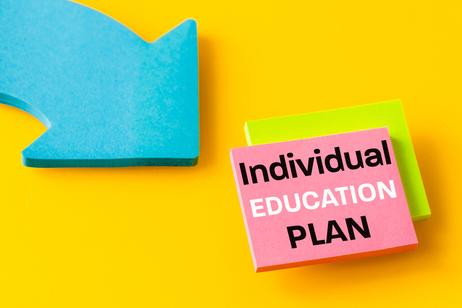
Unlock the power of Individualized Education Programs (IEPs) in this comprehensive guide. Discover how IEPs support students with diverse needs, including behavioral challenges. This article is a must-read for parents navigating the education system and aspiring teachers seeking to make a positive impact.

Individualized Education Programs (IEPs) have been a game-changer in education, offering tailored support to students with a wide range of special needs. From students with learning disabilities to those struggling with behavior, IEPs have played a pivotal role in ensuring every child receives a quality education. This guide will demystify IEPs and explore how they benefit students, especially those facing behavioral challenges.

Understanding the Origin of IEPs

The roots of IEPs can be traced back to the Education for All Handicapped Children Act, now known as the Individuals with Disabilities Education Act (IDEA), signed into law in 1975. This groundbreaking legislation mandated that students with disabilities, including those with behavioral challenges, have the right to a free and appropriate public education tailored to their unique needs. The development of IEPs was a critical component of this law, ensuring that students received individualized support plans to help them succeed academically and behaviorally.

In special education, there's too much emphasis on the deficit and not enough on the strength.

Temple Grandin

The IEP Basics: What Parents Need to Know

For parents, understanding the basics of IEPs is essential. An IEP is a legally binding document that outlines a student's unique learning and support needs and the services and accommodations they will receive. It's a roadmap to success, customized to each child. The IEP process typically involves assessment, goal setting, and regular review meetings.

This video explains what an IEP is.

. . .read more

Recent Articles

What Makes an Elementary School Feel Supportive?
Discover what makes one elementary school more supportive than another, from teacher relationships and family communication to classroom attention, belonging, student services, leadership, routines, and responsive academic support systems.
Second School Tour: Questions Parents Forget to Ask
A second school tour can reveal what families miss initially. Learn which questions to ask about teachers, support, schedules, safety, communication, programs, and everyday student life before enrolling.
Attendance Policies Are Changing: Parent Guide 2026
Attendance policies are changing across public schools. Learn what parents should examine about absences, tardiness, interventions, flexibility, communication, and student support before choosing a school for their child today.

Parenting and Learning Issues

IMPROVING LEARNING
A comprehensive look at the latest trends, expert advice and recent studies into improving student learning. Explore the latest studies into links between student performance, sleep and music. See why schools are opting for later start times and year round schedules.
PARENTAL INVOLVEMENT FROM K-12
Learn how direct involvement in your child’s education can impact school performance. Get expert advice on how to get involved, learn why and when you need to talk to a teacher and ways to make changes on campus.
BULLYING
An overview of bullying in schools, laws to protect students, and the impact on education. This section provides great tips on protecting your child from being bullied or becoming a bully. Learn about the latest anti-bullying laws and see how cyber-bullying effects your child’s school performance.
TYPES OF LEARNING
What type of learner is your child? Be in the know about different types of learning and which classrooms are best suited for each type. What is project-based learning? Cooperative Learning? Would your child benefit from a blended learning experience? Explore these teaching techniques and learn how they could improve your child’s performance.
KINDERGARTEN AND ELEMENTARY ISSUES
Weigh the pros and cons of preschool, full day kindergarten and other issues affecting our youngest learners. Learn what can be done to help your child prepare to enter school, boost confidence, and encourage reading at the grade school level.
HIGH SCHOOL ISSUES
Learn more about issues specific to high school students. Get an overview of high school graduation rates, college readiness, career choice and social issues impacting teenagers in public schools.