About Public Schools

Here we cover the history of public schools, explain the various types and discuss their pros/cons. Learn more about technology on campus, health and nutrition issues, and the latest information related to a variety of student populations.

View the most popular articles in About Public Schools:

The Rise of STEM in Public Schools: 2025 Update

Updated
|
The Rise of STEM in Public Schools: 2025 Update
Explore how STEM is transforming U.S. public schools in 2025—trends, policies, programs, and what parents and educators should know.

The Rise of STEM in Public Schools: 2025 Update

Introduction
Over the past decade, the push to deepen STEM—science, technology, engineering and mathematics—education in U.S. public schools has grown steadily. Today, in 2025, this movement is entering a new phase: larger federal investments, sharper focus on equity, and the integration of emerging technologies. For parents, students and educators navigating the public-school system, understanding the state of STEM in public schools is increasingly important.

Why STEM matters in public education
The logic is clear: careers in STEM fields continue to expand, offering higher wages and greater opportunity. According to recent data, STEM jobs in the United States are projected to grow by 10.4% between 2023 and 2033—more than double the growth rate of non-STEM occupations. The median annual wage for STEM occupations is over $100,000 compared with roughly $46,000 for non-STEM jobs. Meanwhile, the global market for K-12 STEM education was estimated at US $60 billion in 2024 and is forecast to more than double by 2030. Grand View Research

These trends underscore why public schools are increasingly prioritising STEM pathways—not simply as choice options, but as core curriculum enhancements designed to strengthen college readiness and workforce preparation.

Current public-school landscape: scale and performance
As of 2025, U.S. public elementary and secondary schools service tens of millions of students. One recent analysis projects roughly 15.2 million secondary students enrolled in public schools in 2025. Research.com Student-teacher ratios average about

. . .read more

Public School Choice, Magnet Programs & Charter Options — What’s Best?

Updated
|
Public School Choice, Magnet Programs & Charter Options — What’s Best?
Explore public school choice in 2025: comparing magnet programs, charter schools and traditional public schools to find what’s best for your child.

Introduction

When families explore educational pathways, the phrase public school choice often emerges. In 2025, more parents, students and educators are asking: what is the right option — stay with a traditional neighborhood public school, apply for a magnet program, or consider a charter school? This article examines the core distinctions, benefits and challenges of public school choice, magnet programs and charter options, offers expert commentary and updates on current trends, and helps you determine what’s best for your child’s academic journey.

Understanding the Basics: What are the options?

Traditional Public Schools

A traditional public school is the default neighborhood school to which a student is zoned. It is directly managed by the local school district, accepts all students in its attendance area, and follows state-mandated curriculum and policies.

Magnet Programs

Magnet programs are schools of choice within the public school system that emphasise a specific theme — for example STEM, performing arts, world languages or gifted programmes. As one guide explains: “Magnet schools are free public elementary and secondary ‘schools of choice’ that operate within existing public schools in a district.”

Magnet programmes allow families to choose a school based on interest rather than geography.
Typically:

  • They draw students from across districts or large zones rather than strict neighbourhoods.

  • They may have themed curricula and offer enriched opportunities.

  • They are part of the public

. . .read more

The Role of Support Services in Public Schools: Tutoring, Counseling & More

Updated
|
The Role of Support Services in Public Schools: Tutoring, Counseling & More
Explore how tutoring, counseling and comprehensive support services enhance student success in public schools, with 2025 insights for educators, parents and students.

Introduction
In 2025, public schools face unprecedented challenges, including post-pandemic learning recovery, rising mental-health concerns and equity gaps. Support services in public schools—such as tutoring, counselling and comprehensive student-assistance programs—are more critical than ever. This article examines the role of support services in public schools, outlines best practices and offers guidance for parents, educators and students seeking to understand how these supports help achieve stronger outcomes.

1. Defining Support Services in Public Schools
Support services in public schools typically refer to three core domains: academic support (tutoring and supplemental instruction), personal-social/emotional support (counselling, wellness programmes) and wrap-around or whole-child services (mentoring, family engagement and community partnerships).

  • Tutoring and academic intervention services help students who are behind or need enrichment.

  • Counselling and wellness services address mental-health, behavioural or adjustment issues.

  • Wrap-around supports linking students with mentoring, family outreach or external agencies.
    For many school districts, these support services act together to help students remain engaged, thrive academically and develop resilience.

2. Why Support Services Matter in Public Schools
2.1 Addressing Learning Loss and Academic Gaps
The interruption of schooling caused by COVID-19 and other disruptions has increased demand for high-quality tutoring and academic support. Studies show that targeted tutoring and supplemental instruction are effective means of helping students catch up. For example, a study emphasised the benefits of one-on-one tutoring for children with special educational needs.

2.2 Supporting Mental Health and Emotional Well-being
Counselling

. . .read more

The Impact of Social Media on Students – 2025 Updated Insights

Updated
|
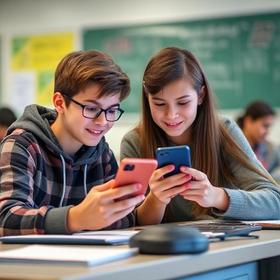
The Impact of Social Media on Students – 2025 Updated Insights
Explore how social media affects students’ academic performance, behaviour and wellbeing in 2025 with expert insights and policy updates.

The Impact of Social Media on Students

In the past decade, social media has become deeply woven into students’ everyday lives, both inside and outside the classroom. As we move into 2025, understanding the impact of social media on students—academically, socially and psychologically—is essential for parents, educators and school leaders. This article updates the original analysis with current data, evolving policies and expert commentary, while retaining the previous structure for clarity and continuity.

Introduction

The term “social media” now covers everything from short-form video apps like TikTok, to image-sharing networks such as Instagram, to collaborative platforms used by students and schools. The latest estimates show approximately 5.24 billion people worldwide are active on social media in 2025, up 4.1 % from the previous year.


For students, social media represents both potential advantages (such as connected learning and peer collaboration) and clear risks (including distraction, mental-health concerns and reduced focus).
The remainder of this article explores the current state of social media use among students, its academic implications, behavioural and mental-health effects, evolving school policies, strategies for positive use, and recommendations for families and educators.
Current Usage Patterns

Recent studies indicate that social media usage remains high among young people and students. Global figures show that 63.9 % of the world’s population uses social media, with an average daily time of about 2 hours 21 minutes as of February 2025. Smart Insights
For school-age students, access to digital devices is nearly universal. For example,

. . .read more

The Push for Career and Technical Education (CTE) in 2025

Updated
|
The Push for Career and Technical Education (CTE) in 2025
Discover how CTE is transforming U.S. high schools and colleges in 2025: new policies, updated data and best practices for students and educators.

The Push for Career and Technical Education (CTE)

In recent years, interest in career and technical education (CTE) has surged as parents, students and educators seek more relevant pathways to careers and post-secondary success. This article updates the 2023 perspective with fresh data, 2025-era policy developments, tuition realities and real-world examples of how CTE is evolving in U.S. schools.

1. Why CTE Is Back in the Spotlight

Career and Technical Education (CTE) offers a strategic bridge between academic learning and in-demand careers. In February 2025, the U.S. Department of Education reaffirmed its commitment to CTE during the annual Career and Technical Education Month, emphasizing renewed funding and national priority. White House
Several factors are driving this renewed focus:

  • Workforce demands: Employers face skilled-labor shortages and seek graduates who can enter the job market with both technical skills and academic literacy.

  • Diversity of student goals: More students and families recognise that a four-year college is not the only route to stable employment; CTE offers viable alternatives.

  • Policy momentum: Recent legislation and state actions are providing incentives and accountability for CTE programs.

  • Equity and access concerns: CTE is increasingly framed as a tool for widening opportunity to students who may not otherwise pursue traditional college paths.

2. 2025 Data Snapshot for U.S. CTE

According to the latest data by the National Center

. . .read more

Recent Articles

Do We Still Need Libraries in Public Schools in 2026
An updated look at the role of public school libraries in 2026, their impact on literacy, equity, and digital learning, and why they remain essential today.
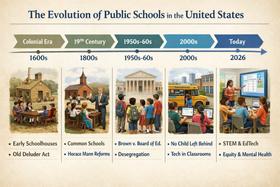
The History of Public Schools in the United States
Explore the history of public schools in the U.S., from colonial roots to 2026 reforms shaping equity, funding, and classroom innovation.
Special-Program Registration Deadlines Explained
Learn what to know about special-program registration deadlines for magnet, CTE, and dual-enrollment options in public schools.

About Public Schools

OVERVIEW OF PUBLIC SCHOOLS
A comprehensive look at the U.S. public school system, including history, governing bodies, funding, and services. Compare private, public and charter schools. Learn more about Magnet school programs and get tips on choosing the right school for your child.
TYPES OF PUBLIC SCHOOLS
Explore the different types of public schools, from charter to language immersion, and learn about the unique pros and cons of each type. Is a co-ed or single sex classroom best for your child? Charter school or magnet? Read expert advice and get valuable tips on the various public education programs available and how to choose what works best for your family.
TECHNOLOGY ON CAMPUS
From eBooks to web cams, technology on campus continues to grow. Learn how the latest technology impacts your child’s education. Get tips on the best ways to integrate technology into education and stay abreast of the latest developments and challenges facing schools.
HEALTH AND NUTRITION AT SCHOOL
From vending machines to Jamie Oliver, bed bugs to tuberculosis, we provide an in-depth look at health and wellness in public schools. Help your kids stay healthy on campus and learn about current health epidemics, vaccination requirements, physical fitness programs and the latest food initiatives.
BACK TO SCHOOL
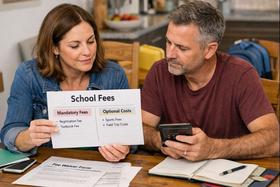
Learn more about preparing your child and wallet for a new school year. Inside you’ll find valuable advice to help your family prepare for the transition from swimsuits to school. While there is no tuition, public school education does not come without costs. Learn more about budgeting for a new school year and get great money saving tips.
STUDENT POPULATIONS
The latest trends, laws and resources for a variety of student populations. Every child has different needs, and this section offers helpful information for LGBT, special education, gifted, low-income, and minority students.