Parenting and Learning Issues

Each child learns differently. Here we offer resources on learning styles and the classroom models that support them, expert advice on how to improve learning, and tips on parental involvement.

View the most popular articles in Parenting and Learning Issues:

Academic Clubs in Public Schools

Updated
|
Academic Clubs in Public Schools
Learn about the growing trend of academic clubs in public schools.

While sports have always been a staple in public schools, many students are taking advantage of non-athletic opportunities, such as academic sports. Both athletes and non-athlete students are discovering that the latest public school clubs are not only building students’ profiles for college applications, but they’re also providing rare opportunities for travel, competitions, awards, and even college scholarships!

Academic Clubs

An academic club is essentially any school-approved group of students, often with a faculty sponsor, who meet to develop activities or discussions based on their particular topic of interest. Group meetings are often informal, and can even involve after-school field trips, community volunteerism opportunities, or other venues. The intent of an academic club is to generate enthusiasm for a topic while encouraging student involvement and achievement.

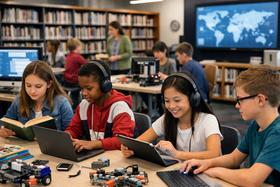
While in the past, most academic clubs were based on school subjects, such as the book club, the math club, or the science club, public schools today have a much greater scope in clubs – and even geared towards gifted students. For example, springing up around campuses are “Robotics Clubs,” where students actually design a robot and compete in competitions. Another forum for clubs is technology-based, where “Gaming Clubs,” “Computer Design Clubs,” or “Web Clubs,” have grown in popularity; students not only learn about how the technology works, but they’re also able to have some fun, as they learn to design their own personal or professional web pages or computer-based games.

This video offers suggestions for school club

. . .read more

Parent-Teacher Conferences

Updated
|
Parent-Teacher Conferences
Learn when to meet with your child's teacher in 2026, how to prepare for parent-teacher conferences, and build strong school-family partnerships that support student success.

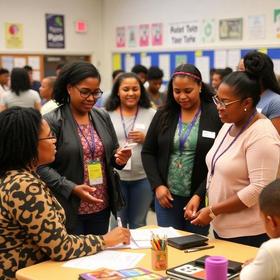
Parent and teacher discussing a student's academic progress during a school conference

As parents struggle to navigate the balance of fostering their child's autonomy versus being actively involved, knowing when to meet with a teacher depends on a child's age, behavior, academic progress, and any special learning needs. Whether a student is gifted, struggling, or displaying average abilities plays a large role in determining when parents should intervene and meet with school leaders.

In 2026, many schools also use parent portals, messaging apps, and virtual conferences to supplement traditional face-to-face meetings, making communication more accessible than ever. However, knowing when to schedule a conversation remains just as important as the method used.

This video offers an example of a parent-teacher conference.

When to Meet with a Teacher

Collaborating Insights

If you have serious and pressing concerns about your child's behavior, academic progress, or other specific or general issues, teachers can provide a great deal of insight into your child's development. According to Terri Mauro, author of The Everything Parent's Guide, "If you have a pressing concern that needs to be addressed right away, don't delay in requesting a meeting yourself."

Surprisingly, teachers may actually spend more consistent time observing your child throughout the day than most parents. Once children are home, they may be playing with friends, participating in extracurricular activities, or spending time independently. As a result, meeting with a teacher to discuss classroom observations

. . .read more

Gifted Children in Public Schools

Updated
|
Gifted Children in Public Schools
Learn how gifted children are identified, approached, and served in public schools.

As public schools are working to make classrooms fully inclusive, where all children are treated equally, many parents are concerned that their gifted child may not be faced with the appropriate educational environment that fosters challenging learning.

Carol Bainbridge, a board member of the Indiana Association for the Gifted, explains: “To be a gifted child is to demonstrate an exceptional talent in a particular area.” This exceptional talent includes high IQ levels and abilities that can be a predictor and indicator of adult achievement. As schools are implementing increasingly orthodox practices across curriculum areas, many gifted children may be left behind instead of pushed ahead.

Gifted Children

What Qualifies as “Gifted”?

There are various ranges of “gifted abilities,” ranging from “Mildly Gifted,” all the way to “Profoundly Gifted.” In a standard bell curve, most average learners fall between a range of 85 and 115, with 100 being the absolute norm. According to Carol Bainbridge, “the farther away from the absolute norm of 100 a child is, the greater the need for special educational accommodations, regardless of whether the distance is on the left or right of 100.”

Lacking a Challenge

While gifted children may possess exceptional abilities, they are not always high achievers. As Bainbridge continues, “even when they don't achieve good grades, they tend to score high on achievement tests, most often in the 95-99 percentile range. They love to learn and their love of learning, good memories, and ability to learn quickly and easily enable

. . .read more

The Best High School Classes for Collegiate Success

Updated
|
The Best High School Classes for Collegiate Success
Learn which classes can best help students prepare for college.

To prepare students for success in college, high schools are providing increasingly rigorous course options to help students establish a foundation for continuing education. According to the College Board, colleges today are “looking for a solid foundation of learning that you can build on in college.” As colleges view high school transcripts as a student’s blueprint of their educational experiences, students should immerse themselves in a combination of academic core classes, along with concentrated subjects that focus on a students’ pathway for potential future studies. By engaging in solid high school college prep courses, students are better prepared for the transition into higher education experiences.

The College Prep Overview

To prepare for college, students can plan their schedule by looking at the guidelines for each core subject area. For the best college prep courses, students should focus primarily on core classes, and then choose elective classes as options that will enhance their skills as a collegiate student.

English

Students should take four units of English while in high school, which can focus on literature, writing, and research courses. Most specifically, an emphasis on composition will help build a foundation for collegiate success, as writing is a large component of continuing education. As College Board advisors further support, students should plan to “take English every year. Traditional courses, such as American and English literature, help you improve your writing skills, reading comprehension, and vocabulary.” Considering that the skills learned in English are often used in almost all courses,

. . .read more

Benefits of Foreign Language Education

Updated
|
Benefits of Foreign Language Education
Learn how foreign language education is beneficial to both elementary and high school students.

While the United States does not nationally mandate the study of a foreign language in public schools, many global schools around the world have incorporated such requirements long ago. In 2001, The Center for Applied Linguistics discovered that most countries have mandatory foreign language requirements for children beginning at eight years old. However, in the United States, most students do not begin to learn another language until ninth grade, or the age of fourteen.

For both young children and teenage students, the study of a foreign language, whether in supplemental or immersion classes, offers intellectual, social, and collegiate opportunities. As young children have the ability to develop language skills early, educators and psychologists are encouraging the instruction of foreign linguistic studies from an early age. In addition, according to researcher Julia Tagliere, “being able to speak another person’s language is a critical skill, especially as increased travel opportunities, satellite programming, and international use of the internet have begun to create a truly global community.”

In this TED talk, John McWhorter outlines 4 reasons to learn a new language.

Foreign Language in Elementary School

Cognitive Benefits

Since the 1960s, studies have shown that the best time to begin the study of a foreign language is in elementary school. Because children at this age show better mental flexibility, more creativity, divergent thinking skills, and improved listening and memory skills, kids are able to process language early on.

. . .read more

Recent Articles

What Makes an Elementary School Feel Supportive?
Discover what makes one elementary school more supportive than another, from teacher relationships and family communication to classroom attention, belonging, student services, leadership, routines, and responsive academic support systems.
Second School Tour: Questions Parents Forget to Ask
A second school tour can reveal what families miss initially. Learn which questions to ask about teachers, support, schedules, safety, communication, programs, and everyday student life before enrolling.
Attendance Policies Are Changing: Parent Guide 2026
Attendance policies are changing across public schools. Learn what parents should examine about absences, tardiness, interventions, flexibility, communication, and student support before choosing a school for their child today.

Parenting and Learning Issues

IMPROVING LEARNING
A comprehensive look at the latest trends, expert advice and recent studies into improving student learning. Explore the latest studies into links between student performance, sleep and music. See why schools are opting for later start times and year round schedules.
PARENTAL INVOLVEMENT FROM K-12
Learn how direct involvement in your child’s education can impact school performance. Get expert advice on how to get involved, learn why and when you need to talk to a teacher and ways to make changes on campus.
BULLYING
An overview of bullying in schools, laws to protect students, and the impact on education. This section provides great tips on protecting your child from being bullied or becoming a bully. Learn about the latest anti-bullying laws and see how cyber-bullying effects your child’s school performance.
TYPES OF LEARNING
What type of learner is your child? Be in the know about different types of learning and which classrooms are best suited for each type. What is project-based learning? Cooperative Learning? Would your child benefit from a blended learning experience? Explore these teaching techniques and learn how they could improve your child’s performance.
KINDERGARTEN AND ELEMENTARY ISSUES
Weigh the pros and cons of preschool, full day kindergarten and other issues affecting our youngest learners. Learn what can be done to help your child prepare to enter school, boost confidence, and encourage reading at the grade school level.
HIGH SCHOOL ISSUES
Learn more about issues specific to high school students. Get an overview of high school graduation rates, college readiness, career choice and social issues impacting teenagers in public schools.