Parenting and Learning Issues

Each child learns differently. Here we offer resources on learning styles and the classroom models that support them, expert advice on how to improve learning, and tips on parental involvement.

View the most popular articles in Parenting and Learning Issues:

Dual Enrollment Programs for High School Students

Updated
|
Dual Enrollment Programs for High School Students

Discover how dual enrollment programs work in 2026, who qualifies, the benefits and costs, and how earning college credit in high school can save money, strengthen college applications, and accelerate progress toward a degree.

Dual enrollment programs allow high school students to receive both high school and college credit for taking a college-level course. A landmark study by the Community College Research Center (CCRC) found that dual enrollment programs positively affect high school graduation rates, college enrollment, college performance, and progress toward earning a degree. More recent research continues to support these findings, showing that well-designed dual enrollment programs improve college readiness, increase postsecondary success, and can reduce the overall cost of earning a college degree. This article examines dual enrollment programs and the benefits they afford. Students interested in broader college readiness strategies may also enjoy reading about how public schools prepare students for college.
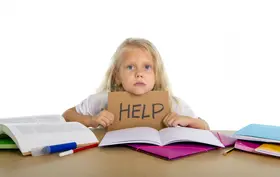
The number of dual enrollment programs has increased significantly over the past two decades. Today, dual enrollment opportunities are available in nearly every state through partnerships between public school districts, community colleges, and four-year institutions. According to the National Center for Education Statistics (NCES), participation has continued to grow as states expand access to advanced coursework and career pathways. Community colleges remain the primary providers of dual enrollment, although many public universities also participate.

How Do Dual Enrollment Programs Work?

The requirements of dual enrollment programs vary considerably nationwide. The following characteristics are common:

  • Only certain lower-level college courses are approved for dual credit. Remedial classes, physical education, and music courses are typically excluded from the programs.
  • Academic standards are imposed on participants, including minimum grade point averages, placement requirements, or standardized test scores.
  • Students
. . .read more

Tutoring & Supplemental Education: The Pros and Cons

Updated
|
Tutoring & Supplemental Education: The Pros and Cons
We look at the pros and cons of personal tutors, learning centers and other types of supplemental education.

Many children struggle with school. Sometimes these problems are caused by a lack of interest, while other times they may be created by learning challenges that your child faces. If your child is having difficulty in school, this does not mean the child cannot ultimately succeed. There are many ways to help your child overcome academic hurdles. In fact, one of the solutions to overcoming academic problems is to have your child work with a tutor.

However, before you hire a private tutor, or sign your child up at the local learning center, you should first confirm whether your child truly needs the one-on-one attention the tutor provides.

How do I know if my child needs a tutor?

First, before you even hire a tutor or visit a learning center, you should determine whether or not your child needs a tutor. Ask yourself these questions:

  • Are your child’s grades slipping?
  • Is your child obtaining great grades, but not feeling challenged at school?
  • Is your child displaying low self-esteem, or thinking negatively about himself or herself in regards to school performance?
  • Does your child’s teacher think he or she may need a tutor, or sends notes home indicating he or she may need help with his or her homework?
  • Does a college your child wants to attend require high scores on tests to be accepted?

If the answer to any of these questions is, “yes,” these are signs that a one-to-one tutor may be useful to help your child to enjoy learning. A

. . .read more

Understanding the National PTA

Updated
|
Understanding the National PTA
Learn about how the national PTA works and interacts with your local PTA.

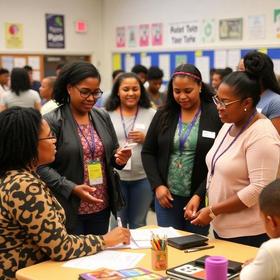
The Parent Teacher Association (PTA) is the largest volunteer child advocacy organization in the United States. From its small beginning in 1897, the PTA has emerged as a powerful voice for children at the national, state, and local levels. This article describes the role of the National PTA and discusses how the organization assists parents and teachers working together at the local level.

Overview

The PTA has been instrumental in the passage of several ground-breaking initiatives for the welfare of children, including child labor laws, the juvenile justice system, hot lunch programs, mandatory immunizations, and kindergarten classes. Its purpose has always been to better the lives of children by:

  • Serving as a voice for children before government and other decision-making bodies
  • Developing resources for families and communities
  • Advancing the education and well-being of every child

Some of the strategies that the PTA uses in accomplishing its purpose are:

  • Promoting the welfare of children and youth in home, school, community, and place of worship
  • Raising the standards of home life
  • Recommending laws for the care and protection of children and youth
  • Bringing parents and educators together so that they can work effectively for the education of children and youth

This TEDTalk discusses the importance of a solid parent-teacher relationship.

Promoting Pro-Child Policies

The National PTA speaks out to Congress and the general public about issues affecting children and their education. Subjects currently being addressed at the national level include parental involvement, serving

. . .read more

Understanding Your Local PTA

Updated
|
Understanding Your Local PTA
Learn about how your local PTA works and how getting involved can help your community.

This article has been updated to reflect 2026 data and recent developments.

The Parent Teacher Association (PTA) is a nationwide network of parents and teachers working together in national, state, and local organizations to improve the lives of children. Membership at the local level is open to anyone who has an interest in children. There are now nearly 3 million members nationwide, according to National PTA. Joining the PTA is an excellent way for parents to get involved in their children's education. Local PTAs throughout the country are making a difference in the quality of children's education.

A local PTA chapter is part of a national network of organizations working together for children's interests. Most parents join a local unit, which automatically gives them membership in the state and national PTAs. The local unit can represent a single school or a group of schools. Local units have the autonomy to establish their own priorities, select the national programs in which they will participate, assess the needs of the school, and decide how to raise needed funds.

This video explains reasons for joining the PTA.

Fundraising

Local units frequently hold fundraisers, the proceeds from which go to support school programs, building maintenance or improvements, and educational events. The following are examples of how local PTAs can improve a child's education.

  • The children at Washington Elementary School in San Gabriel, California,
. . .read more

Uniforms: The Pros and Cons

Updated
|
Uniforms:  The Pros and Cons
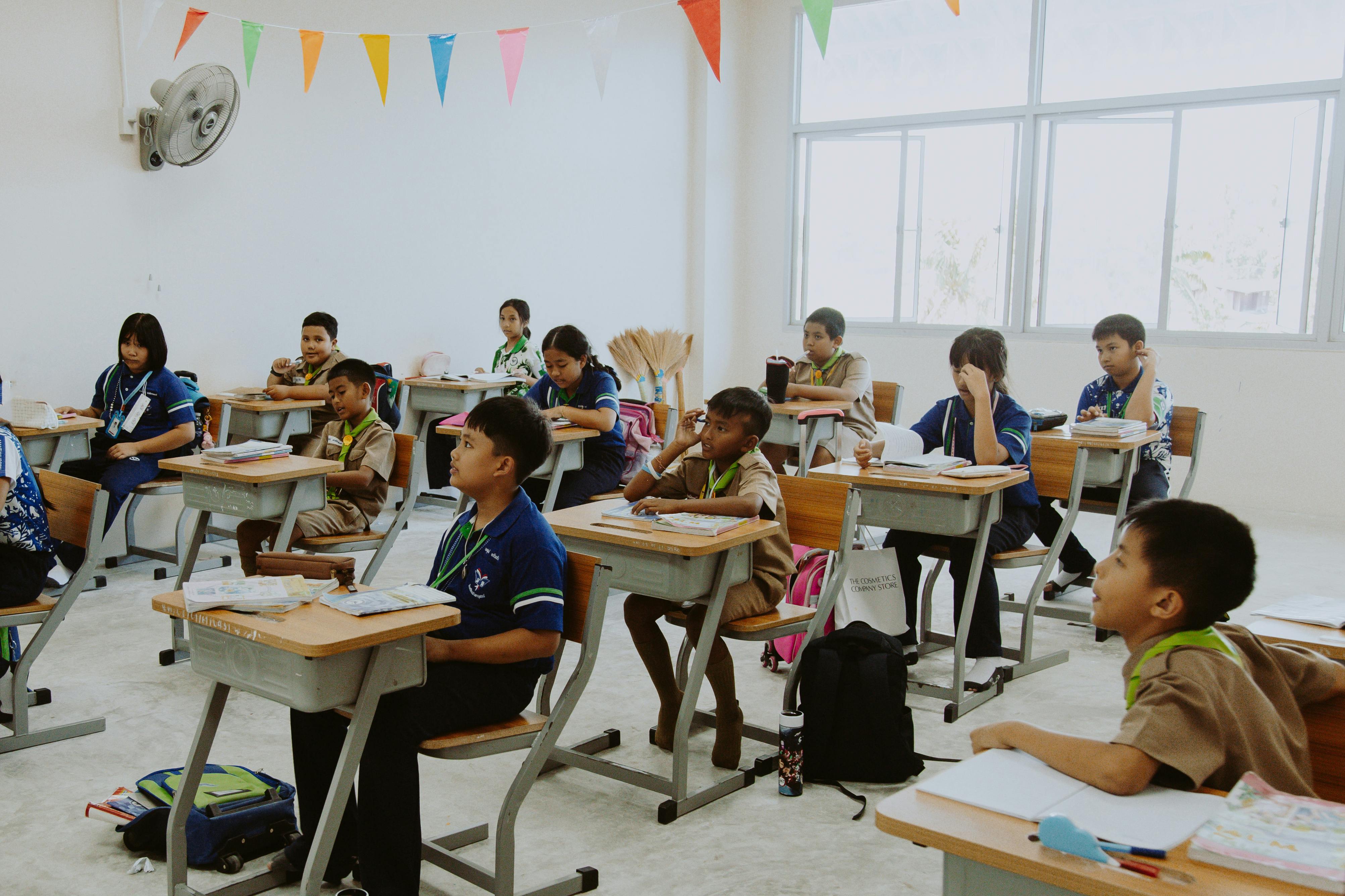
This comprehensive article explores the pros and cons of school uniforms in public schools. It discusses their impact on safety, learning environment, self-expression, and cost-effectiveness. The piece presents statistics, expert opinions, and arguments from both proponents and opponents, helping parents make informed decisions about uniform policies.

The prevalence of uniforms in public schools continues to rise in the United States as parents and school administrators exert efforts to create safe environments in our schools.

  • According to the National Center for Education Statistics, nearly 20% of all public schools have adopted uniform mandates.
  • Approximately 22% of elementary schools, 19% of all middle schools, and 10% of high schools currently require uniforms, and this trend continues to accelerate.

Although uniforms have been a mainstay of private schools, public schools didn’t jump on the bandwagon until 1994, when the Long Beach California School District integrated school uniforms to address safety issues challenging the district.

  • According to the school district data, within one year after the implementation of uniforms, the fights and muggings at school decreased by 50%, while sexual offenses were reduced by 74%.
  • Across the country, similar statistics abound; for example, at Ruffner Middle School in Norfolk, VA, the number of discipline referrals decreased by 42% once uniforms were enforced.

Fueled by these statistics, more schools nationwide require uniforms in their public schools, naming school safety as their primary motivation.

  • Even with these compelling statistics, other statistics argue that uniforms are not as beneficial as school administrators and parents are encouraged to believe.
  • Opponents cite research that shows a lack of individualism and comfort among students, working to decrease student learning and success.
  • Thus, the question remains: are public school uniforms good for your child?

The Benefits of Public School Uniforms

. . .read more

Recent Articles

What Makes an Elementary School Feel Supportive?
Discover what makes one elementary school more supportive than another, from teacher relationships and family communication to classroom attention, belonging, student services, leadership, routines, and responsive academic support systems.
Second School Tour: Questions Parents Forget to Ask
A second school tour can reveal what families miss initially. Learn which questions to ask about teachers, support, schedules, safety, communication, programs, and everyday student life before enrolling.
Attendance Policies Are Changing: Parent Guide 2026
Attendance policies are changing across public schools. Learn what parents should examine about absences, tardiness, interventions, flexibility, communication, and student support before choosing a school for their child today.

Parenting and Learning Issues

IMPROVING LEARNING
A comprehensive look at the latest trends, expert advice and recent studies into improving student learning. Explore the latest studies into links between student performance, sleep and music. See why schools are opting for later start times and year round schedules.
PARENTAL INVOLVEMENT FROM K-12
Learn how direct involvement in your child’s education can impact school performance. Get expert advice on how to get involved, learn why and when you need to talk to a teacher and ways to make changes on campus.
BULLYING
An overview of bullying in schools, laws to protect students, and the impact on education. This section provides great tips on protecting your child from being bullied or becoming a bully. Learn about the latest anti-bullying laws and see how cyber-bullying effects your child’s school performance.
TYPES OF LEARNING
What type of learner is your child? Be in the know about different types of learning and which classrooms are best suited for each type. What is project-based learning? Cooperative Learning? Would your child benefit from a blended learning experience? Explore these teaching techniques and learn how they could improve your child’s performance.
KINDERGARTEN AND ELEMENTARY ISSUES
Weigh the pros and cons of preschool, full day kindergarten and other issues affecting our youngest learners. Learn what can be done to help your child prepare to enter school, boost confidence, and encourage reading at the grade school level.
HIGH SCHOOL ISSUES
Learn more about issues specific to high school students. Get an overview of high school graduation rates, college readiness, career choice and social issues impacting teenagers in public schools.